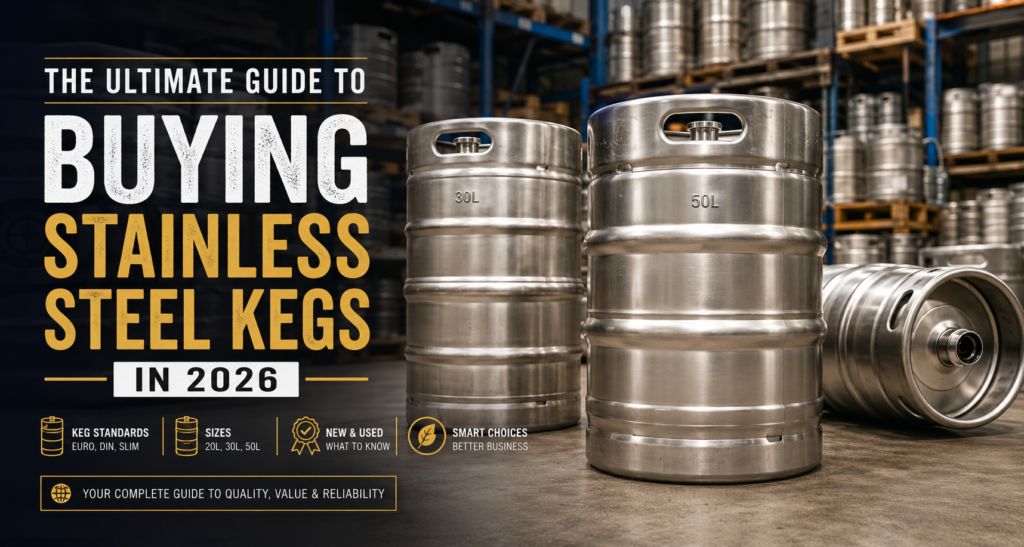
Whether you’re launching a new craft brewery, expanding an existing beverage business, or replacing aging inventory, buying stainless steel kegs is one of the most important investments you’ll make. Kegs are the backbone of draft beverage distribution. They protect your product, represent your brand, and directly impact your operational efficiency.
Yet many buyers focus almost exclusively on price. While cost certainly matters, choosing the wrong keg format, size, or supplier can create years of unnecessary complications. In 2026, breweries and beverage producers face rising material costs, increasing sustainability requirements, and growing pressure to maximize every euro invested in their operations. As a result, understanding the stainless steel keg market has never been more important.
This guide covers everything you need to know before buying stainless steel kegs, from European keg standards and common sizes to the advantages of used kegs and the mistakes buyers should avoid.
Why Stainless Steel Kegs Continue to Dominate the Beverage Industry
Despite the arrival of disposable PET kegs and other packaging alternatives, stainless steel kegs remain the gold standard for breweries, cider makers, wineries, kombucha producers, and soft drink manufacturers.
The reason is simple: no other packaging format offers the same combination of durability, sustainability, and long-term value.
A quality stainless steel keg can remain in service for decades. Unlike disposable solutions, it can be cleaned, refilled, transported, and reused thousands of times. This dramatically reduces packaging waste while lowering costs over the lifespan of the container.
For breweries operating in Europe, where sustainability regulations continue to evolve and environmental responsibility is becoming a competitive advantage, reusable stainless steel kegs remain the most practical solution.
In many cases, the initial investment may seem higher than alternative packaging options. However, when calculated over years of use, stainless steel kegs often deliver the lowest cost per liter distributed.
The Biggest Mistake Keg Buyers Make
One of the most common mistakes new brewery owners make is purchasing kegs based solely on the lowest available price.
At first glance, two kegs may appear nearly identical. However, differences in condition, compatibility, refurbishment quality, and supplier standards can significantly affect their long-term value.
A cheap keg that requires frequent repairs or causes filling line issues quickly becomes expensive. Likewise, purchasing the wrong keg format can lead to inefficient storage, transportation problems, and compatibility headaches throughout your operation.
The smartest buyers evaluate the total cost of ownership rather than the initial purchase price alone.
New vs Used Stainless Steel Kegs
One of the first decisions buyers face is whether to purchase new or used stainless steel kegs.
New kegs offer obvious advantages. They arrive in pristine condition, provide maximum lifespan, and often include manufacturer warranties. For breweries building a premium brand image, new kegs may also provide more consistent appearance and branding opportunities.
However, new kegs come with a substantial upfront investment.
This is one reason why the market for used stainless steel kegs continues to grow across Europe.
A professionally refurbished keg can often perform almost identically to a new one while costing significantly less. Since stainless steel is exceptionally durable, many used kegs still have decades of useful life remaining.
For growing breweries, this creates an opportunity to expand keg fleets quickly without placing unnecessary strain on cash flow.
Many of today’s most successful craft breweries started with refurbished equipment, including their keg inventory. Rather than investing heavily in brand-new containers, they allocated resources toward production capacity, sales growth, and market expansion.
Understanding European Keg Standards
Before purchasing kegs, it’s important to understand the various standards used throughout Europe.
Although all stainless steel kegs perform the same basic function, their dimensions can vary considerably. These differences affect storage, transportation, handling, and compatibility with existing infrastructure.
Euro Kegs
Euro kegs are among the most common formats found throughout Europe.
They feature a wider body and lower overall height compared to other designs. This shape provides excellent stability during transport and storage, making Euro kegs particularly popular among breweries with large warehouse operations.
The most common Euro keg sizes include:
- 20L Euro Kegs
- 30L Euro Kegs
- 50L Euro Kegs
For many breweries, the 50L Euro keg remains the standard choice due to its efficiency and widespread acceptance across bars, restaurants, and distributors.
DIN Kegs
DIN kegs follow German industrial standards and are easily recognizable by their taller and narrower profile.
This design can be advantageous in certain transportation and storage environments where vertical space is more readily available than floor space.
DIN kegs are especially common in Germany, Austria, and neighboring markets, although they are used throughout Europe.
Breweries distributing internationally should always verify which standards are most common within their target markets before investing heavily in a specific format.
Slim Kegs: RSR, PSP, and RRR
Slim kegs have become increasingly popular in recent years, particularly among breweries looking to maximize warehouse efficiency.
The most common slim formats include RSR, PSP, and RRR kegs.
Because these kegs occupy less floor space, they can improve storage density and transportation efficiency. For breweries operating in urban environments where warehouse costs are high, these savings can become significant over time.
The choice between Euro, DIN, and Slim kegs often depends less on beverage type and more on logistics strategy.
Which Keg Size Is Right for Your Business?
Choosing the right keg size requires understanding how your customers consume and distribute your product.
Many newer breweries assume larger kegs are always better because they reduce packaging costs per liter. In reality, the ideal size depends heavily on the type of account being served.
20L Stainless Steel Kegs
Twenty-liter kegs have become increasingly popular among craft breweries, taprooms, and specialty beverage producers.
Their lighter weight makes them easier to handle and transport. They are also ideal for seasonal beers, limited releases, and lower-volume accounts where product freshness is a priority.
Many modern craft breweries use 20L kegs extensively because they allow more flexibility within their distribution network.
30L Stainless Steel Kegs
The 30L keg occupies a useful middle ground between flexibility and efficiency.
For restaurants, event venues, and medium-volume accounts, the 30L format often provides the perfect balance. It offers greater volume than a 20L keg while remaining easier to handle than a full 50L unit.
Many breweries find that 30L kegs help reduce transportation costs without sacrificing operational flexibility.
50L Stainless Steel Kegs
The 50L keg remains the workhorse of the European beverage industry.
For high-volume bars, distributors, and established brewery networks, no other format matches its efficiency.
Because fewer kegs are required to move the same volume of product, breweries benefit from lower handling costs, reduced cleaning requirements, and improved operational efficiency.
When demand is predictable and turnover is high, the 50L format is often the most economical choice.
How Many Kegs Does a Brewery Actually Need?
This is one of the most frequently overlooked questions in the industry.
Many breweries focus on production capacity while underestimating the number of kegs required to support distribution.
A keg’s life cycle involves much more than simply holding beer. At any given moment, a portion of your fleet is being filled, transported, stored at customer locations, emptied, returned, cleaned, and prepared for reuse.
As a general rule, breweries often require between three and five kegs for every keg currently serving product in the market.
Businesses planning aggressive growth should pay particular attention to fleet sizing. Running out of available kegs can become a surprisingly expensive bottleneck.
What to Look for When Buying Used Stainless Steel Kegs
Not all used kegs are created equal.
A reputable supplier should thoroughly inspect, clean, pressure-test, and refurbish every keg before resale.
When evaluating used inventory, pay close attention to the condition of the keg body, welds, handles, and chimes. Minor cosmetic wear is normal and rarely affects performance. Deep structural dents, damaged welds, or signs of improper repair should be viewed more cautiously.
The spear assembly deserves particular attention. Since it controls filling and dispensing operations, its condition directly affects reliability and safety.
Professional refurbishment processes can significantly extend a keg’s useful life, making used kegs one of the most attractive investments available to breweries today.
Why Sustainability Is Driving Demand for Used Kegs
Sustainability is no longer just a marketing term. It has become a practical business consideration.
Refurbished stainless steel kegs allow breweries to reduce waste while extending the useful life of existing assets. Every reused keg represents one less container that needs to be manufactured, transported, and introduced into the supply chain.
As environmental regulations continue to evolve across Europe, many beverage producers are actively seeking ways to reduce their carbon footprint without compromising quality.
Used kegs provide a simple and effective solution.
Choosing the Right Keg Supplier in Europe
Selecting the right supplier is just as important as selecting the right keg.
An experienced supplier should offer multiple keg formats, transparent grading standards, professional refurbishment services, and reliable logistics support.
Inventory availability is another critical consideration. As stainless steel prices fluctuate and demand changes throughout the year, access to a large inventory can make a significant difference when expanding your fleet.
The best suppliers do more than sell kegs. They help breweries make informed purchasing decisions based on operational requirements, distribution strategies, and future growth plans.
Final Thoughts
Buying stainless steel kegs in 2026 is about much more than selecting a container. The right keg fleet can improve operational efficiency, reduce costs, support sustainability goals, and create a stronger foundation for growth.
Whether you’re considering 20L, 30L, or 50L kegs, choosing between Euro, DIN, or Slim formats, or deciding between new and used inventory, the key is understanding how those decisions affect your business over the long term.
For many breweries across Europe, professionally refurbished stainless steel kegs offer the ideal combination of performance, sustainability, and value. When sourced from a trusted supplier, used kegs can deliver years of reliable service while freeing up capital for the investments that drive growth.
The breweries that succeed in 2026 will not simply buy more kegs. They will buy the right kegs.